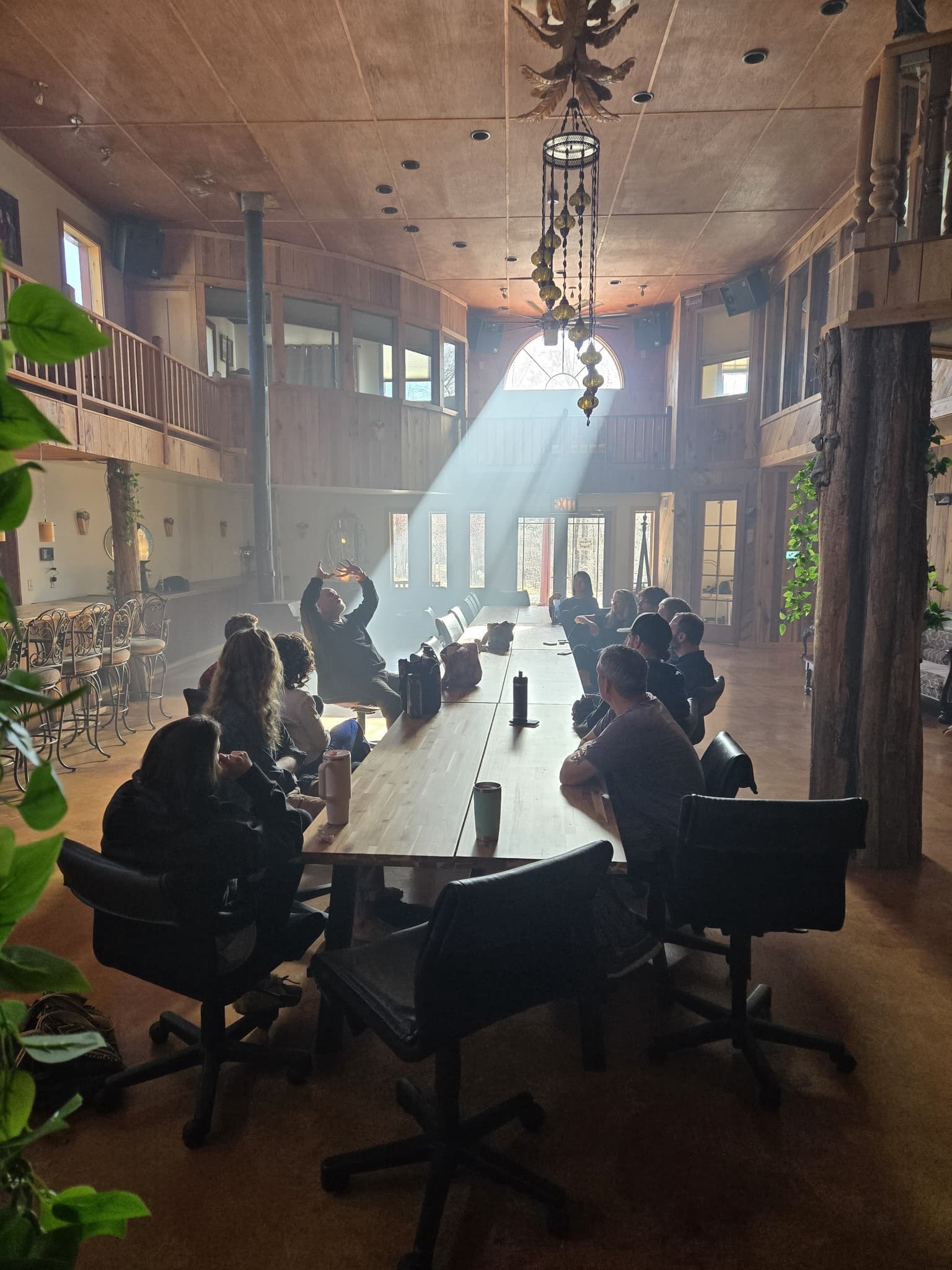
Safety, Ethics, and Education
CODE maintains a structured environment grounded in safety, ethical responsibility, and ongoing education.
All participation occurs within a defined framework that includes screening, preparation, guided experience, and integration. These elements work together to ensure that each individual is supported with clarity, accountability, and care.
Our Framework
Participation within CODE is not casual. It is structured and guided at every stage.
The framework includes:
- Screening — All participants are reviewed for readiness prior to engagement
- Preparation — Members receive guidance to prepare physically, mentally, and emotionally
- Guided Experience — All ceremonial experiences are conducted with trained ministers and stewards present
- Integration — Reflection and integration are supported following each experience
These elements are not optional. They are the structure that protects both the individual and the integrity of The Path.
Structure and Oversight
Ceremonial experiences are guided by trained ministers and supported by stewards who are responsible for maintaining the integrity of the environment.
Oversight is provided by the Safety, Ethics, and Education Council (SEEC).
The SEEC exists to uphold standards, review practices, and respond to concerns across all areas of participation.
The SEEC operates with independence and authority to ensure accountability and alignment with the principles of The Path of Direct Experience.
The Role of the SEEC
The SEEC is responsible for:
- Maintaining and refining safety and ethical standards
- Reviewing participant concerns and reports
- Providing oversight across ceremonies and community interactions
- Supporting ongoing education for members, stewards, and ministers
- Ensuring that structure, responsibility, and care are upheld consistently
The SEEC exists to protect both the individual and the integrity of The Path of Direct Experience.
Standards
Participation within CODE is governed by clear standards:
- All participation is structured and guided
- Screening is required for all members/participants
- No unsupervised or casual use is permitted
- All sacraments are received within a defined ceremonial context
These standards are actively upheld to maintain clarity, safety, and integrity.
Responsibility
All members/participants share responsibility for maintaining the integrity of the space.
This includes:
- Respect for others
- Honesty in communication
- Adherence to structure and guidance
Participation requires personal responsibility. The environment depends on it.
Reporting & Support
Concerns related to safety, ethics, or boundaries may be brought confidentially to the SEEC.
Reports are taken seriously, reviewed with care, and handled with discretion and accountability.
The SEEC maintains clear pathways for communication, review, and response.
Response and Escalation
When concerns are raised, the SEEC may:
- Gather additional information
- Engage directly with involved individuals
- Provide guidance or corrective direction
- Establish boundaries or restrictions when necessary
- Remove individuals from participation if required
All actions are taken with the goal of maintaining safety, integrity, and alignment with The Path.
Education
Education is a continuous part of participation within CODE.
Members, stewards, and ministers are supported through ongoing guidance, conversation, and shared understanding.
This ensures that safety, ethics, and responsibility are not static ideas, but living principles expressed in practice.
Safety is not a feature. It is the foundation.
Ethics are not suggested. They are upheld.
Education is not optional. It is continuous.